A terminated REDD+ project in Mozambique: Mitigation underperformance, lasting local benefits
Ivo Steimanis, Tobias Vorlaufer, Björn Vollan
Abstract
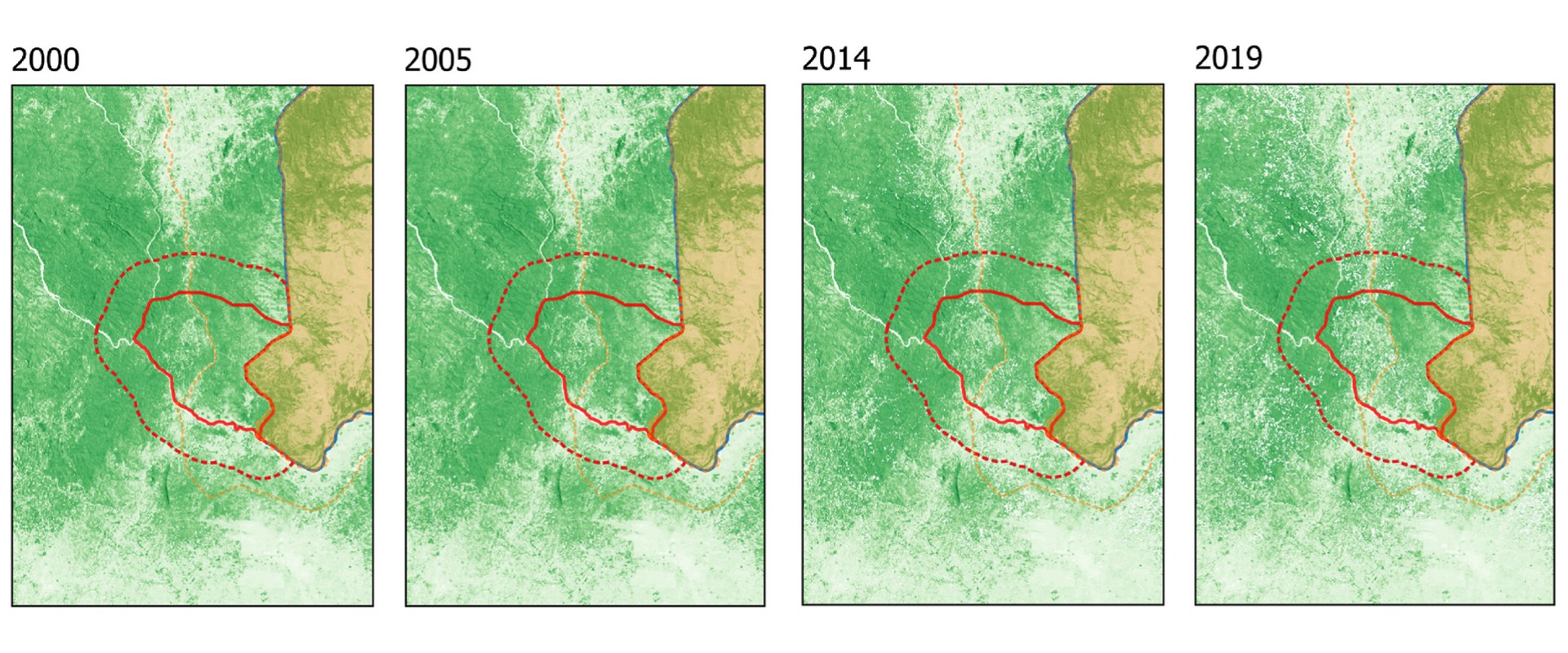
This study evaluates the long-term performance of the Sofala Carbon Community Project (SCCP) in Mozambique, a Payments for Ecosystem Services (PES) program combining asset-building, use-restriction strategies, and development interventions, partially financed through the voluntary carbon market. Using quasi-experimental analysis of remote sensing data, we find that the SCCP reduced tree cover loss by 2.2 percentage points during implementation (2005–2014) and by 2.1 percentage points in the five years after its conclusion (2015–2019), corresponding to 41% and 20% reductions in deforestation relative to control areas, with no evidence of spatial leakage. Yet, the attenuating forest cover impacts largely disappeared 5 years after the project ended. Household surveys suggest that 95% of agroforestry systems adopted during the project persisted seven years post-program, and participants report stronger conservation skills, higher perceived efficacy, and higher socio-economic status compared to non-participants. Former SCCP employees are about five times as likely as non-participants to hold long-term jobs in the neighboring national park, consistent with skill and network gains as plausible mechanisms. However, limited understanding of contractual terms and land tenure arrangements raise equity concerns. Our findings are consistent with literature on VCM-financed PES programs that are unlikely to meet mitigation claims without rigorous, empirically validated carbon accounting and resilient financing structures. With this single case study in mind, such projects may also be associated with lasting local environmental and socio-economic benefits.